
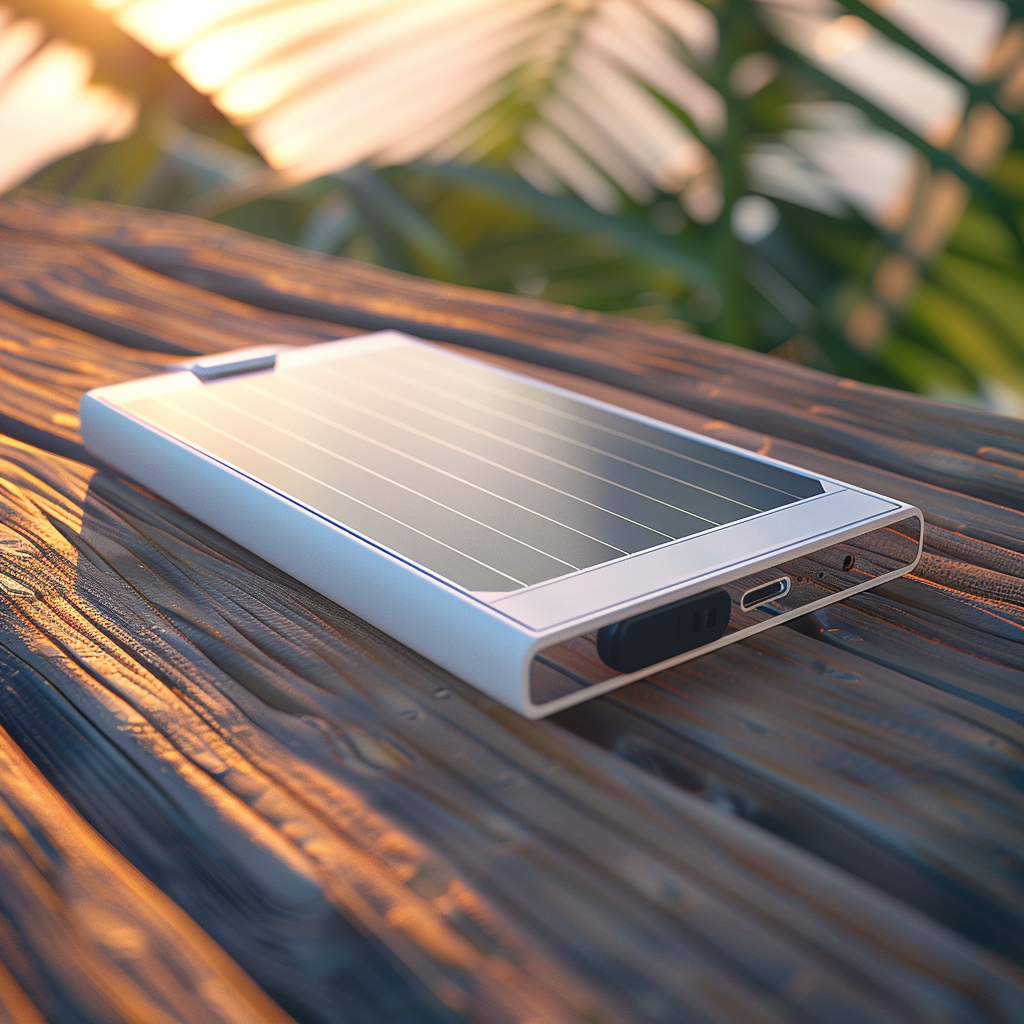
How a Solar Power Bank Works
A solar power bank is a device that combines the convenience of a portable charger with the efficiency of renewable energy sources. A solar charger stores energy in its internal batteries, which can then be used to recharge electronic devices such as smartphones, tablets, and other USB devices. The operation of solar power banks is quite simple: when exposed to sunlight, the solar panels mounted on the device capture solar energy and convert it into electrical energy through photovoltaic cells. This energy is then stored in the internal battery.
In the absence of sunlight (during the night or in cloudy conditions), the solar power bank can still be used like a regular portable charger by utilizing the energy previously stored. Most solar power banks also feature a USB input, allowing them to be charged via the electrical grid, thus offering additional flexibility. Advanced models may include LED indicators that show the charging status, allowing the user to know at any time how much energy is still available.
Advantages of Solar Power Banks
One of the main advantages of solar power banks is their sustainability. By capturing solar energy, these devices reduce reliance on fossil fuels and traditional electrical grids, thereby helping to minimize environmental impact. They are particularly useful for frequent travelers and outdoor enthusiasts such as campers, hikers, and adventurers, especially in areas where traditional energy sources may not be easily accessible. Solar energy provides a free and always available alternative as long as there is sufficient light.
Another significant advantage of a solar phone charger is its self-sufficiency. With a solar power bank, there is no need to worry about finding an outlet to recharge the device. As long as sunlight is available, the power bank can be recharged, providing energy to recharge other electronic devices. This is especially useful in emergencies, such as during power outages when access to electricity may be limited. Additionally, many solar power banks for phones are designed to be robust and waterproof, making them ideal for challenging environmental conditions.
Measuring the Charge of a Solar Power Bank

Measuring the charge of a solar power bank is crucial to ensure that the device functions correctly and is always ready for use. The capacity of a power bank is generally measured in milliampere-hours (mAh), indicating the amount of energy it can store.
To know how much energy is available, many solar power banks are equipped with LED indicators. These indicators, typically arranged in a series of four or five lights, display the charging status. When all the lights are on, it means the power bank is fully charged. As energy is used to recharge other devices, the lights gradually turn off, indicating the remaining energy. Some models may also have a digital display that shows the remaining charge as a percentage, providing an even more precise indication.
To effectively measure the charge, it is important to consider the charging speed of the solar panels, which can vary based on lighting conditions. Solar energy charging may take several hours of direct sunlight exposure to achieve a full charge, especially for higher-capacity models. It is also essential to position the power bank in a place where it receives the maximum amount of sunlight possible to optimize the charging process.
Different Types of Solar Power Banks
The best solar power bank depends on the user’s needs. Solar power banks are available in various sizes and capacities suitable for different requirements. Smaller models with a capacity of 4000 mAh are compact and lightweight, ideal for everyday use or short trips. These devices are sufficient to recharge a smartphone one or two times and offer a practical solution for those needing a portable charger that takes up little space.
Medium-sized solar power banks with a capacity of around 8000 mAh provide a good balance between portability and performance. They can recharge a smartphone multiple times or power devices that require more energy, such as tablets or digital cameras. These models are ideal for longer trips or for those who need greater energy autonomy.
More powerful solar power banks with a capacity of 10,000 mAh or more are suitable for intensive applications and situations where a large energy reserve is needed. These power banks can recharge multiple devices simultaneously or power high-energy-consuming devices. They are perfect for outdoor expeditions, emergency situations, or for those who want to ensure they always have sufficient energy available.